
Grocery shopping is one of the most frustrating parts of learning to eat at a celiac-safe level of gluten free. I’m sure most of my readers can identify with the special hell that comes from learning how to spot gluten on ingredient lists and what different phrases and certifications actually mean. Grocery shopping takes so much more time than it used to, and you probably come home with far less food than you’d hoped because you reached the point of decision fatigue and just noped out on the rest of your grocery list. It takes many months even begin to feel confident in a grocery store again.
Imagine, then, learning all the necessary minutiae and developing a safe list of regular foods—only to relocate to another country and have to learn how to do it all over again in another language!
My blog is for all of my fellow celiacs and anyone else with a gluten intolerance who is learning how to navigate a gluten free life in the Netherlands. Visitors to the Netherlands will also find value in my content, but I will be focusing a lot more on groceries than gluten free restaurants. Plenty of other people provide travel and restaurant content—but I could have really used some quick and dirty grocery tips when I first arrived in the country.
My Dutch life began six months after I was officially diagnosed with celiac disease. When I first arrived in the Netherlands on my own, with my child in tow, I had too many essential tasks to take any risks around gluten. I had thought it wouldn’t be too much of a problem, as we had a rental lined up and all I had to do was collect the keys and then wait a day or two for all our furniture and household gear to be delivered. Surprise! Our moving company had failed to disclose some essential paperwork, so we were going to be stuck in a completely empty house for at least five weeks… We had a functional fridge, and that was it. I had to buy all the barest necessities for making food while also trying to figure out what food was actually safe to eat in a language I only spoke a few words of, all while severely jet-lagged in a smaller Dutch town I’d never been to before. (Yes, we rented a house we’d never seen in person in a town we’d never been to. Welcome to the housing shortage in the Netherlands.) I really struggled to make decisions about food and ended up going twelve hours at a time without eating for days in a row, because I couldn’t decide if it was worse to be hungry or risk incapacitation when there were so many essential tasks to be done and a child to take care of.
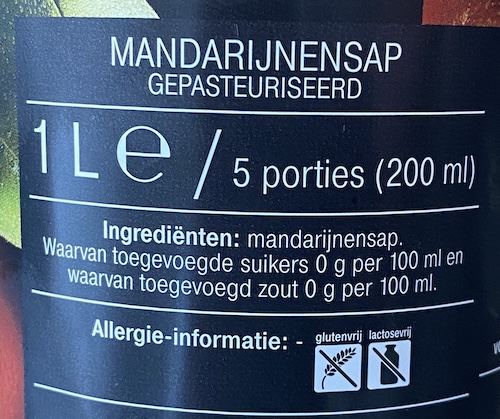
Quite honestly, if it wasn’t for Albert Heijn, I probably would have starved to death in the first week. Albert Heijn has the most beautiful cheat code for people who don’t speak Dutch yet: a gluten free symbol next to the ingredients list of any of their house brand foods. (They also have a symbol for dairy or lactose free.) I was delighted to discover that their own brand gluten free offerings included many deli meats, pre-sliced cheese, and things like hummus and other spreads. I lived off Schär mini-baguettes and hummus for days… I will do separate guides for Albert Heijn and other grocery stores in the future, but Albert Heijn deserves a giant shoutout right up front. They will always be the best buddy who had my back when I was in a tight spot.
If you’re starting out grocery shopping in the Netherlands, here are a few tips that will help you navigate Dutch ingredient lists.
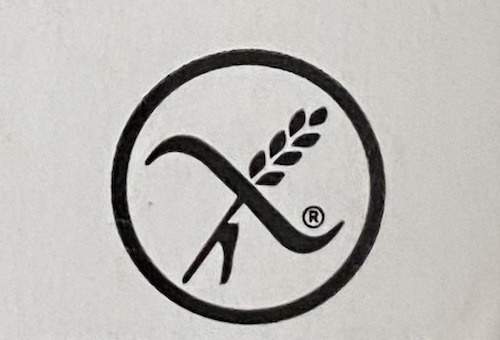
The first Dutch word to know and love is “glutenvrij” (gluten free). If the packaging says something is gluten free, it is legally obligated to meet the European safety standard for gluten free food. But if you’d like to be extra sure it has met the safety standard, you can look for the Association of European Coeliac Societies’ crossed grain certification mark. See this page for an image and a list of certified products by country of manufacture.
Like the rest of Europe, allergens must be printed in bold print or capital letters so that you can easily spot your allergen in the list. Gluten is “gluten” in Dutch, which makes it even easier to recognize. A manufacturer may also use the proper name of a gluten containing grain, like wheat (another top allergen).
Be on the lookout for:
- Tarwe (wheat) and its subsets like Spelt (spelt) and Khorasan (khorasan)
- Rogge (rye)
- Gerst/Gort (barley) – Not to be confused with Gierst (millet) which is safe to eat as long as it is not cross-contaminated.
Haver (oats) is another ingredient to keep an eye out for. Like in the rest of the world, European oats are often cross-contaminated with wheat/gluten during the growing and harvesting process. But Europe also has a high demand for gluten free oats. In Europe, gluten free oats are often grown and harvested under a purity protocol, but they are sometimes mechanically sorted and certified. Check food manufacturer websites if you want to know more about the gluten free oats they choose to use. If an ingredient list says “haver”, the oats are cross-contaminated and not safe to eat. If the ingredient list says “glutenvrije haver”, then the oats are deemed gluten free. If a company has gone so far as to use gluten free oats in their recipe, the product is most likely gluten free—but always double check the rest of the ingredients to be sure. (Tip: Many granola and protein bars use gluten free oats. You’ll find a surprising number of options mixed in with regular bars on the protein shelves at the grocery store.)
If you are sensitive to oats, I’m so sorry. Europe uses a LOT of gluten free oats in their gluten free food offerings. Definitely keep an eye out for “haver” if you can’t tolerate oats.
Another important note is that gluten-removed wheat flour is used in some European products. If you have an allergy to wheat or are uncomfortable with the concept of gluten free wheat flour, you will want to watch for “glutenvrije tarwe” on the ingredient list. The tarwe (wheat) will be highlighted due to allergen labeling laws, so it will not be hard to find. (Also keep an eye on fresh products, as several gluten free bakeries and a number of pizza restaurants also use gluten-removed wheat flour in their products.)
May contain warnings: The Dutch rules around cross-contamination and cross-contamination statements are in the process of being updated. The Dutch government tightened legislation to add more clarity and safety, and food packagers should be in compliance by January 2026. I will talk about this more, later, as the guidelines are still being clarified to the public and it’s a complicated topic. But for now, you should know that “kan sporen van gluten bevatten” (may contain traces of gluten) and similar phrases are a warning flag. Definitely do your research before eating anything that has a may contain warning. I personally don’t take the risk.
As you know, grocery shopping for gluten free food can feel like traversing one of the deepest circles of hell. Doing it in a foreign language makes it yet another level of torture. I hope that my hard-won knowledge will help you ease more smoothly into living gluten free in the Netherlands. More tips and tricks are incoming. I’ll do post announcements on Instagram, if you’d like to follow along. Eet smakelijk!